
Finding a lump in your neck can feel unsettling, and many of the patients who visit us arrive worried about what it might mean for their health. The reassuring truth is that most thyroid nodules are completely harmless, and a simple scan can tell us a great deal in just minutes. At our clinic, we rely on thyroid ultrasound for thyroid nodules to give you clear, honest answers without surgery or guesswork. Our goal is to replace that quiet anxiety with real understanding, so you know exactly what is happening in your thyroid gland and feel confident about the next step, whether that involves monitoring, further testing, or adjustments to thyroid hormone medication.
What Is a Thyroid Nodule?
A thyroid nodule is a small growth or lump that forms inside the thyroid gland, the butterfly-shaped organ at the base of your neck. These nodules are extremely common, and they tend to appear more often as we grow older. Many people never notice them at all because they cause no symptoms. Others feel a lump, see mild swelling, or notice a slight change when swallowing. We frequently discover these growths during a routine neck exam or an imaging test ordered for another reason. If you want to understand how widespread this issue has become, our detailed look at the thyroid nodule epidemic explains why so many people are affected today.
Why a Thyroid Ultrasound for Thyroid Nodules Matters
When we discover a nodule, our first goal is to determine whether it is benign or requires a closer look. A thyroid ultrasound is the most reliable starting point, and it remains the imaging tool we trust above all others as part of comprehensive thyroid care Florida patients can rely on. This scan uses harmless sound waves rather than radiation, so it is safe to repeat as often as your care requires. It gives us a sharp, detailed picture of the nodule’s size, shape, and internal makeup within a few short minutes. Roughly nine out of 10 nodules are noncancerous, which is reassuring for the vast majority of patients. Even so, careful imaging lets us catch rare cases that need extra attention at an early, treatable stage.
Some nodules behave differently than others. A small subset begin producing thyroid hormone on their own, independent of the body’s normal signaling, a condition we cover in our piece on the autonomous thyroid nodule and hyperthyroidism. Ultrasound helps us flag when a nodule’s appearance or behavior fits this pattern so we can investigate further.
What Happens During the Scan
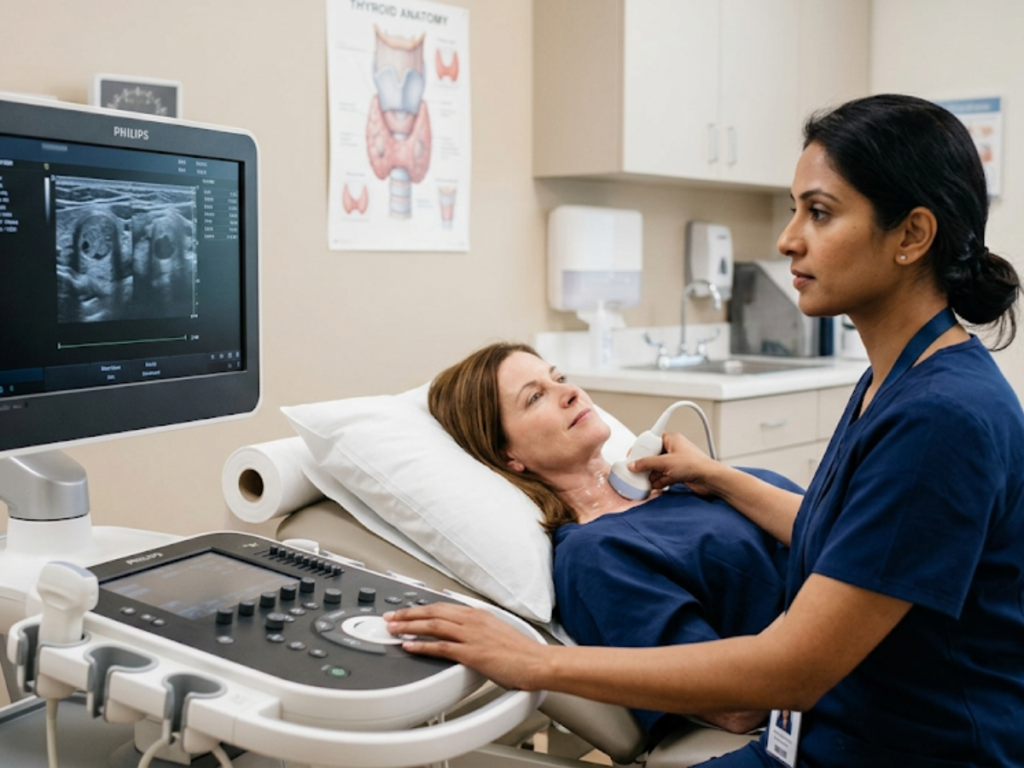
The process is quick and painless, and it asks nothing of you The process is quick and painless, making preparing for a thyroid appointment much simpler than many patients expect, and it asks very little of you beforehand. You simply lie back comfortably while we apply a warm gel and glide a small handheld probe across the front of your neck. The probe sends gentle sound waves into the tissue and records the echoes that bounce back toward it. Those echoes form a live image on our screen, which we study closely in real time. Most appointments take less than thirty minutes, and you can head straight back to your normal day afterwards. There is no recovery period, no needles, and no discomfort to worry about.
What the Ultrasound Looks For
A trained eye can read a surprising amount from these images, so we focus on several important details during every scan.
- Size and Growth: We measure each nodule precisely to track even small changes from one visit to the next. A nodule that grows steadily may warrant a closer look, while a stable one usually requires only routine monitoring.
- Suspicious Features: Certain traits earn our attention, including irregular borders, tiny microcalcifications, and a solid rather than fluid-filled texture. We also note whether the nodule appears darker than the surrounding tissue or taller than it is wide. These features alone do not confirm anything serious. Instead, they help us decide whether a biopsy or further testing is the wise next move for you.
When a Biopsy Becomes Helpful
If a scan reveals worrying signs, we may recommend a fine needle aspiration biopsy. This straightforward in-office procedure uses ultrasound guidance to collect a tiny tissue sample for laboratory analysis. The results give us strong confidence about whether the cells are healthy. This careful step helps us avoid unnecessary surgery while making sure nothing important slips past unnoticed.
Monitoring Thyroid Nodules Over Time
Many nodules never need treatment and only call for regular check-ins to confirm they remain stable. We often schedule follow-up scans at set intervals to monitor for any meaningful changes over time. Our guide on following thyroid nodules with ultrasound explains how this gentle, ongoing approach protects your long-term health. For a deeper background, our discussion in chapter five on the thyroid nodule epidemic provides valuable context. This watchful method spares you from invasive testing while keeping you fully informed at every stage. It reflects our commitment to personalized care rather than a one-size-fits-all approach to your thyroid health.

Frequently Asked Questions
Is a thyroid ultrasound painful?
No, the scan is completely painless. We apply a warm gel and gently move a probe across your neck, with no needles or radiation involved.
How often should thyroid nodules be checked?
It depends on the nodule, but many patients return every six to twelve months. We tailor each schedule to your specific results and personal risk level.
Can an ultrasound tell if a nodule is cancerous?
It cannot confirm cancer on its own, yet it clearly spots suspicious features. When needed, we follow up with a guided biopsy to obtain a definitive answer.
Do I need to prepare for a thyroid ultrasound?
No special preparation is required. You can eat normally, take your usual medications, and simply wear comfortable clothing to your appointment for the easiest experience.
Are most thyroid nodules dangerous?
No, the vast majority are benign and harmless. Regular imaging simply helps us confirm this and catch any rare concerns at an early, manageable stage.
Take the Next Step Toward Peace of Mind
A thyroid nodule should never leave you guessing or anxious about your own health. With one quick, comfortable scan, we can give you the clear answers you deserve and a thoughtful plan built around your needs. Reach out to our team today to schedule your thyroid evaluation, and let us help you protect your thyroid with the expert, caring guidance you can truly trust.