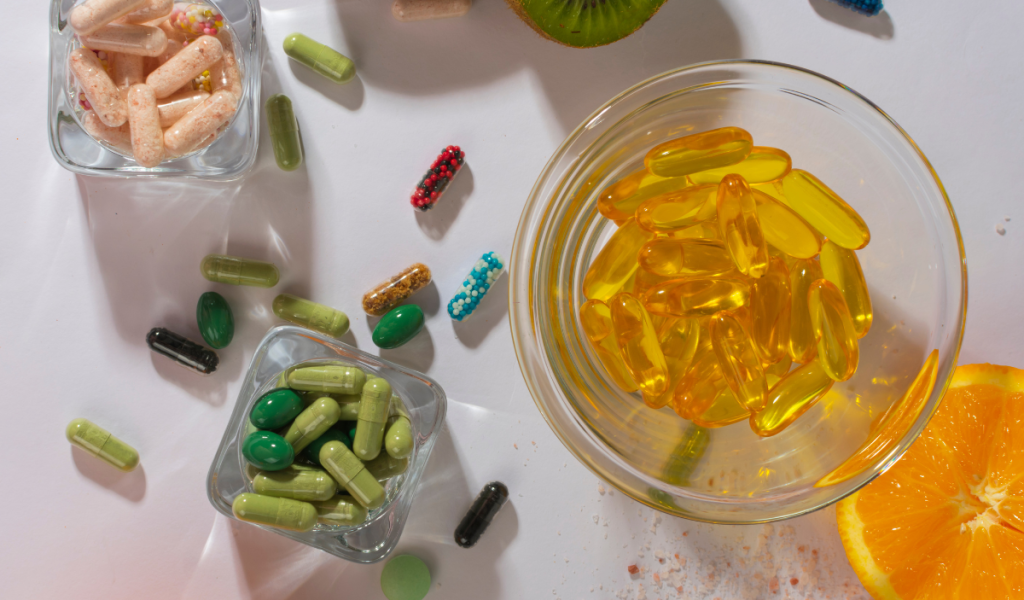
Patients often arrive at our office with a bag full of supplements picked up based on social media claims or a well-meaning friend’s recommendation. Some of these choices are genuinely helpful. Others do little more than lighten the wallet without offering any real measurable benefit. Separating real thyroid support supplements from marketing hype is exactly what this guide is meant to do, especially when considering how thyroid antibodies may influence thyroid health.
Why Not All Thyroid Supplements Are Created Equal
The supplement industry is largely unregulated compared to prescription medication, which means claims on a label rarely reflect the strength of the science behind them.
Some ingredients have decades of clinical research supporting their role in thyroid hormone production and immune regulation. Others rely on a single small study or, in many cases, no meaningful research at all.
This is why we encourage patients to ask for evidence before adding anything new, rather than assuming a product works simply because it is marketed toward thyroid health.
A helpful rule of thumb worth remembering is to look for ingredients studied in patients with your specific condition, whether that is Hashimoto’s, hypothyroidism, reverse T3 syndrome, or simple isolated nutrient deficiency, rather than generic thyroid support claims.
Selenium: The Most Researched Thyroid Support Supplement
Selenium consistently ranks among the best documented thyroid support supplements available, particularly for patients managing autoimmune thyroid conditions.
This mineral plays a direct role in converting inactive thyroid hormone into its active form, and deficiency has been linked to worsening autoimmune activity in several studies.
We explore this connection in detail in our article on selenium and Hashimoto’s disease research, including who tends to benefit most from supplementation. For a deeper look at how selenium and iodine interact in autoimmune thyroid patients, see Part Two of our selenium and iodine series.
Vitamin D and Thyroid Function
Vitamin D deficiency appears more frequently in patients with autoimmune thyroid conditions than in the general population, though the exact relationship is still being studied.
Correcting a genuine deficiency often supports overall immune regulation, which indirectly benefits patients managing Hashimoto’s or other autoimmune thyroid concerns. We discuss this immune connection further in addressing the autoimmune component of thyroid disease.
Testing levels before supplementing matters here as much as anywhere else, since appropriate amounts vary significantly from one patient to another. Taking a fixed dose without knowing your starting point can lead to levels that swing too high just as easily as too low.
Zinc and Iron: Overlooked but Essential
Zinc supports the enzymes responsible for thyroid hormone production, yet it rarely gets the attention selenium or iodine receive in most conversations about thyroid health.
Iron deficiency is another commonly missed factor, particularly in women, since low iron can blunt the effectiveness of thyroid hormone even when medication dosing looks correct on paper.
Ferritin, the storage form of iron, often needs to sit comfortably well within range rather than simply above the lowest cutoff before thyroid symptoms meaningfully improve. Standard panels frequently miss this important distinction entirely. Understanding these nutrient levels can become even more important when evaluating hormonal changes after 40, as shifting hormone levels may affect how patients experience fatigue, energy changes, and other symptoms.
Iodine: Helpful for Some, Risky for Others
Iodine is essential for thyroid hormone production, but it is also one of the most misunderstood thyroid support supplements on the market today. Our three-part series on Hashimoto’s, selenium, and iodine covers this relationship in depth, including Part Three, which focuses specifically on iodine and autoimmune thyroid disease.
In patients with autoimmune thyroid disease, excess iodine can actually worsen antibody activity rather than help it. This is a critical distinction most general wellness advice overlooks entirely, and one we’ve seen play out in cases of iodine-induced hyperthyroidism.
Understanding your antibody status matters here more than almost anywhere else, which we explain further in our guide to thyroid antibodies and what high TPO levels mean.
For patients wondering whether iodine supplementation is worth the risk at all, we’ve also written about why iodine is safe and effective when dosed appropriately, and what to look for when shopping for iodine at the health food store.
Ashwagandha and Adaptogens: What the Evidence Actually Shows
Ashwagandha has gained popularity for supporting thyroid function, and some smaller studies suggest modest benefits for patients with mild hypothyroidism.
That said, the research remains limited compared to selenium or vitamin D, and results vary considerably depending on the individual and underlying cause of thyroid dysfunction.
Adaptogens like ashwagandha also interact with stress hormones, which means patients dealing with adrenal concerns alongside thyroid issues should approach dosing carefully rather than assuming more is automatically better.
Why Testing Should Come Before Supplementing
Choosing supplements without understanding your actual lab picture is essentially guessing, even when the ingredients themselves are backed by solid research.
A normal TSH result does not always tell the full story, a topic we cover thoroughly in our article on why a normal TSH doesn’t always mean a healthy thyroid.
Full thyroid panels, antibody testing, and nutrient levels together give a much clearer picture than any single number in isolation.
Supplements Are Not a Substitute for Treatment
Even the most effective thyroid support supplements work best as part of a broader treatment plan rather than as a standalone fix for a diagnosed thyroid condition.
Diet plays a meaningful supporting role as well, something we walk through in our complete Hashimoto’s diet guide for patients managing autoimmune thyroid disease, including our series on wheat gluten and celiac disease and how gluten sensitivity and leaky gut contribute to autoimmune conditions like Hashimoto’s.
Patients who combine the right supplements with an appropriate medication approach, including natural desiccated thyroid where suitable, generally report better overall symptom control than either approach alone.
Frequently Asked Questions
Can supplements replace thyroid medication?
No, supplements may support thyroid function but cannot replace prescribed medication for patients with a confirmed thyroid hormone deficiency.
Is selenium safe for everyone?
Selenium is generally well tolerated, though appropriate amounts depend on individual lab results and should be discussed with your provider first.
Should I take iodine if I have Hashimoto’s?
Not without guidance. Iodine can worsen autoimmune thyroid activity in some patients, making testing essential before starting supplementation.
How do I know which supplements I actually need?
Comprehensive lab testing identifies specific deficiencies, allowing us to recommend supplements based on your actual results rather than general assumptions.
Are over-the-counter thyroid supplements regulated?
Not in the same way medications are. Quality and dosing accuracy vary significantly between brands, making physician guidance particularly important.
Getting a Plan Built Around Your Actual Labs
Guessing your way through the supplement aisle rarely solves a real underlying thyroid problem, and it can occasionally make things worse instead of better. If you are ready to find out which thyroid support supplements actually make sense for your body, schedule a consultation with our team and let your lab results guide the plan.