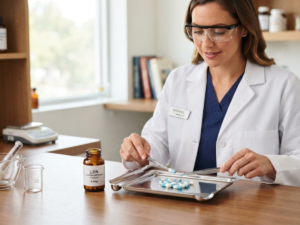

Testosterone replacement therapy (TRT) is intended for relief of symptoms from testosterone deficiency. Regular laboratory monitoring is required for monitoring treatment efficacy and for monitoring adverse side effects. Is the treatment producing the intended response or are adjustments needed?
At TruemedMD, our initial laboratory panel is more sophisticated and includes many tests not usually done by mainstream medicine. This additional testing, not usually included by other testosterone clinics, gives us more information which can usually explain the underlying issue causing the low testosterone. For example, we include serum B12 and MMA (methyl malonate) two laboratory markers for B12 deficiency which can cause low testosterone. We also test for gluten sensitivity, another cause of leaky gut, dysbiosis, malabsorption, chronic inflammation and low testosterone. We also test for H. Pylori, a bacterial infection of the stomach which can cause gastritis, low testosterone and auto-immune disease. There are many others.
For serial monitoring of the patient on testosterone, we use a complete laboratory panel for TRT monitoring which includes: Free and Total testosterone levels, chem panel, CBC (hemoglobin and hematocrit), serum iron and ferritin, PSA and estradiol.
Testing is individualized according to the patient’s age, medical history, symptoms, treatment, and response to therapy.
Why Are Lab Tests Important During Testosterone Therapy?
Testosterone levels can change after testosterone treatment begins, and the appropriate dose for one patient may not be appropriate for another. Testosterone therapy monitoring provides objective information that can be used to adjust dosage and modify therapy over time.
Of course, the obvious goal of treatment is to increase testosterone levels with complete relief of low testosterone symptoms. We also do follow up telephone calls every 6 weeks to stay in contact with the patient. Laboratory monitoring is done at 6-12 weeks after starting treatment and once stable, every 6 months. We are most concerned with following free and total testosterone levels, blood count, serum iron and ferritin, LH, FSH and PSA levels. A chem panel is always included. When clinically indicated, the patient is referred for regular monitoring by the Urologist. Most patients are routinely seen and followed annually by their urologist.
The American Urological Association recommends follow-up testosterone testing during treatment and periodic monitoring of hematocrit and PSA (see below). (7)
What Are the Most Important TRT Monitoring Labs?
Several laboratory tests may be useful during testosterone therapy. The exact panel varies by patient, but commonly monitored markers include free and total testosterone, hemoglobin and hematocrit, iron and ferritin, PSA, LH, FSH, and estradiol.
Total Testosterone
The total testosterone level is one of main concerns on follow up labs. The goal of therapy is to increase testosterone levels obtaining full relief from symptoms. The obvious goal of treatment is to obtain health benefits without adverse effects. Test results are interpreted in relation to the timing of the patient’s testosterone dose and the testosterone formulation being used.
Free Testosterone
Much of the circulating testosterone is bound to serum binding globulin, and the bound subfraction can not provide biologic activity. The free testosterone test gives the portion of total testosterone that is not bound to serum hormone binding protein (SHBG) in the bloodstream, and is biologically a active. Free testosterone provides additional information when total testosterone does not explain the patient’s symptoms or hormone status. A supplement called boron reduces SHBG and is a useful for increasing Free Testosterone. (4-6)
Hemoglobin and Hematocrit
It is well known that testosterone stimulates the bone marrow to manufacture red blood cells, thus raising the blood count. If the blood count rises too much, usually from excess testosterone or underlying genetic predisposition, this is called polycythemia, and is treated with phlebotomy, by going to the blood bank and donating blood. We routinely monitor blood count with the CBC blood test which measures hemoglobin and hematocrit.
PSA and Prostate Monitoring
Although annual PSA (prostate-specific antigen) testing for the general population is no longer recommended because of the high false positive rate, we routinely monitor PSA annually in males on testosterone therapy. Elevated PSA does not necessarily mean treatable prostate cancer is present. There are many other causes of elevated PSA such as BPH (benign prostatic hypertrophy), prostate infection, and testosterone therapy itself will raise the PSA slightly while testosterone blocking drugs will lower it. All patients on testosterone visit their local urologist for annual evaluation.For more about the PSA test read this article: PSA Screening for Prostate Cancer, the Failed Medical Experiment
Estradiol
Testosterone is converted to estradiol by the aromatase enzyme, and elevated estradiol is usually related to testosterone excess which may be treated by reducing the testosterone dosage or adding an aromatase inhibitor drug (anastrozole) to the protocol. Severe elevation of estradiol in males may cause feminization with breast enlargement and nipple sensitivity. Report these symptoms to your doctor. This is another good reason to routinely check estradiol levels on the follow up lab panel.
Liver and Metabolic Testing
Our routine followup panel always includes a comprehensive metabolic panel (chem panel) which provides tests for liver and kidney function, glucose levels, and other metabolic markers. The chem panel does not directly measure testosterone levels, but does provide important information to explain symptoms such as fatigue, weight changes, or reduced energy.
Should You Check LH and FSH While on Testosterone?
Yes, we routinely check LH and FSH on all routine follow up labs. LH and FSH are useful for determining if the testosterone dosage is effective. If there is no change in LH and FSH, that means the topical testosterone is not being absorbed, or not being applied properly, or perhaps there is a compounding error in the formula.
Should Thyroid Tests Be Included in TRT Monitoring?
We routinely include follow up thyroid lab testing every 6 months. Thyroid testing can help explain persistent symptoms despite effective testosterone levels in the lab range, especially when underlying thyroid disorder is suspected.
Fatigue, changes in body composition, mood changes, and difficulties with concentration are symptoms of both low testosterone and low thyroid. Thus,there is considerable overlap of symptoms for testosterone deficiency and thyroid disorders. This is the main reason we use a complete panel and broad evaluation to uncover underlying health problems that are causing the low testosterone. Simply throwing testosterone at the patient without uncovering the underlying cause is bad medicine. Chronic Fatigue symptoms may have many possible underlying causes. For more on this see: The Non-Mystery of Chronic Fatigue Syndrome. For more on symptoms of a low thyroid condition: Ten Symptoms of the Low Thyroid Condition.
How Often to Do Labs?
When starting treatment or when the dose is adjusted, a lab panel is done at 6-12 weeks, after testosterone levels have equilibrated. Once the patient is stable on treatment, serial testosterone laboratory monitoring is done every 6 months. The goal of testosterone therapy is to provide the health benefits of testosterone without the adverse side effects.
In 2018, Dr. J.P.Mulhall published the American Urology Associate (AUA) guidelines for testosterone therapy, recommending checking testosterone levels and hemoglobin/hematocrit every 6–12 months, or sooner if clinically indicated. (7)
Your physician may recommend more frequent laboratory testing if your symptoms do not resolve promptly, if there are changes in dosage, or when abnormal test results require follow up.
When Should You Talk to Your Doctor About TRT Monitoring?
Contact your healthcare provider if you develop new or worsening symptoms while taking testosterone, particularly if you experience:
- Significant reduction in energy or mood
- New breast tenderness or enlargement, or nipple sensitivity
- Changes in urine flow or prostate-related symptoms
- Persistent headaches or visual problems
- Concerns about maintaining fertility
- Abnormal laboratory test results
Laboratory monitoring is especially important when changing the testosterone dose, switching formulations, or adding other hormone-related medications.
Contraindications to Testosterone Treatment:
Contraindications to testosterone therapy include: untreated severe obstructive sleep apnea, severe lower urinary tract symptoms, uncontrolled heart failure, myocardial infarction or stroke within the last 6 months, or thrombophilia.
Take Medical Assistance To Approach Testosterone Monitoring
At the TruemedMD Clinic, our medical director, Jeffrey Dach, MD, monitors testosterone therapy as an ongoing medical treatment rather than a one-time prescription. At TruemedMD, the patient will have scheduled follow up calls with progress notes in the chart. We also do follow-up laboratory testing which includes chem panel, CBC, hemoglobin, hematocrit, serum iron and ferritin, PSA, estradiol, free and total testosterone, LH, FSH as mentioned above. Other tests may be added as deemed clinically indicated.
Questions to Ask
What blood tests should be monitored while on testosterone therapy?
Common TRT monitoring labs may include chem panel, CBC- hemoglobin, hematocrit, serum iron and ferritin, PSA, estradiol, free and total testosterone, LH, FSH as mentioned above. Other tests may be added as deemed clinically indicated.
How often should testosterone levels be checked on TRT?
Testing frequency depends on the treatment stage and testosterone formulation. During dose adjustment, testing may occur sooner, while stable patients are generally monitored periodically. We usually recheck labs 6-12 weeks after starting testosterone therapy, and at 6 months intervals thereafter.
Why is hematocrit checked during testosterone therapy?
Excess testosterone may increase red blood cell production, and serum iron. Monitoring the blood count with hemoglobin and hematocrit, and monitoring serum iron and ferritin identifies the need to adjust testosterone dosage. In some cases, treatment is indicated with phlebotomy at the blood bank, i.e. donating blood is the treatment. For more about health benefits of donating blood see this article: Donating Blood Prevents Heart Disease.
Do I need PSA testing while taking testosterone?
Annual PSA monitoring for the general population is no longer recommended by most medical society guidelines because of over-diagnosis and over-treatment and lack of mortality benefit found on large scale randomized studies. However, at our TruemedMD clinic, we routinely follow PSA on our follow up lab panel for all men on testosterone therapy. Even so, we realize that PSA testing frequently yields false positive results, and we use caution with interpretation of the PSA result. For more about the PSA test read this article: PSA Screening for Prostate Cancer.
If You are Having Low Testosterone Symptoms, We Can Help
At TruemedMD, our medical director, Jeffrey Dach MD starts with a complete patient evaluation with medical history, review of symptoms, physical examination, and a complete laboratory panel. Attention is given to uncover the underlying cause of low testosterone. After starting treatment, we do careful patient follow up, as well as follow up laboratory monitoring. If you have symptoms of low testosterone, and would like a medical evaluation, Contact the TruemedMD office and make an appointment today.
Articles with Related Interest:
Testosterone Therapy Improves Life and Prolongs Survival
Low Testosterone is Associated with Increased Mortality
Male Testosterone Replacement, Benefits and Risks
Testosterone Reduces Mortality in Diabetic Males
References:
1) Bhasin, Shalender, et al. “Testosterone Therapy in Men with Androgen Deficiency Syndromes: An Endocrine Society Clinical Practice Guideline.” The Journal of Clinical Endocrinology & Metabolism, vol. 95, no. 6, 2010, pp. 2536–59. https://pubmed.ncbi.nlm.nih.gov/20525905/
2) Bhasin, Shalender, et al. “Testosterone Therapy in Men With Hypogonadism: An Endocrine Society Clinical Practice Guideline.” The Journal of Clinical Endocrinology & Metabolism, vol. 103, no. 5, 2018, pp. 1715–44. https://pubmed.ncbi.nlm.nih.gov/29562364/
3) Wang, Christina, et al. “Investigation, Treatment, and Monitoring of Late-Onset Hypogonadism in Males: ISA, ISSAM, EAU, EAA, and ASA Recommendations.” European Urology, vol. 55, no. 1, 2009, pp. 121–30. https://pubmed.ncbi.nlm.nih.gov/18762364/
4) Naghii, Mohammad Reza, et al. “Comparative Effects of Daily and Weekly Boron Supplementation on Plasma Steroid Hormones and Proinflammatory Cytokines.” Journal of Trace Elements in Medicine and Biology, vol. 25, no. 1, 2011, pp. 54–58. https://pubmed.ncbi.nlm.nih.gov/21129941/
5) Nielsen, Forrest H., et al. “Effect of Dietary Boron on Mineral, Estrogen, and Testosterone Metabolism in Postmenopausal Women.” The FASEB Journal, vol. 1, no. 5, 1987, pp. 394–397. https://pubmed.ncbi.nlm.nih.gov/3678698/
6) Pizzorno, Lara. “Nothing Boring About Boron.” Integrative Medicine (Encinitas), vol. 14, no. 4, 2015, pp. 35–48. https://pmc.ncbi.nlm.nih.gov/articles/PMC4712861/
7) Mulhall JP, Trost LW, Brannigan RE, et al. Evaluation and Management of Testosterone Deficiency: AUA Guideline. The Journal of Urology, vol. 200, no. 2, Aug. 2018, pp. 423–432. https://www.auanet.org/guidelines-and-quality/guidelines/testosterone-deficiency-guideline