If you have Hashimoto’s thyroiditis, you may have seen information about selenium for Hashimoto’s disease and wondered about the medical studies. Selenium is a trace mineral important for the thyroid gland, used in the production of thyroid hormone, and used as an anti-oxidant protecting the thyroid from the damaging effects of hydrogen peroxide. Over the years, a massive amount of medical literature has been generated on Selenium and Hashimoto’s Thyroiditis.
In this article, we will walk you through the medical research on the use of selenium in Hashimoto’s disease, specifically on the ability of selenium supplementation to reduce thyroid antibody levels. Let’s get started on examining the medical evidence for selenium.
Understanding Hashimoto’s Thyroiditis and the Role of Selenium
Hashimoto’s thyroiditis is an autoimmune thyroid disease in which the immune system mistakenly attacks healthy thyroid tissue. Over time, this ongoing attack damages thyroid tissue, impairs production of thyroid hormone and leads to hypothyroidism (i.e. a low thyroid state). Eventually, thyroid hormone treatment is needed.
Doctors typically confirm the auto-immune diagnosis of Hashimoto’s Thyroiditis by measuring thyroid peroxidase antibodies (TPO), and Thyroglobulin antibodies. Thyroid function can be measured with thyroid-stimulating hormone (TSH) and the Free T3 and Free T4. We always include the reverse T3 as well. Higher anti-thyroid antibody levels reflect more active autoimmune inflammation taking place within the thyroid gland.
Dietary Modification: Although testing for selenium, and giving selenium when found low is important, there are other factors involved. Avoiding wheat gluten, is a key element of our treatment protocol for Hashimoto’s symptoms. This is discussed more fully in our previous article: Wheat Gluten and Auto-Immune Disease.
Why the Thyroid Needs Selenium
The thyroid holds one of the highest concentrations of selenium per gram of tissue in the entire body. This mineral is a building block for selenoproteins, including glutathione peroxidase, our major intracellular anti-oxidant. Glutathione is key to protecting thyroid cells (called thyrocytes) from oxidative stress from damaging effects of excess hydrogen peroxide generated during thyroid hormone production.
When the patient is selenium deficient, the thyrocytes lose their protection from oxidative damage, contributing to ongoing tissue damage to the cellular components of the thyrocytes. There is an important connection between selenium and iodine leading to a large volume of studies in the medical literature. For more on this topic, see: Hashimoto’s Thyroiditis and Selenium, Part One, with more in-depth discussion.
What the Research Says About Selenium and Autoimmune Thyroid Disease
Multiple clinical trials and a growing number of systematic reviews have looked at selenium for Hashimoto’s disease showing encouraging results with improved outcomes.
Selenium and Thyroid Antibody Levels
A 2024 systematic review and meta-analysis pooling data from dozens of randomized trials found a significant reduction in TPO antibody levels among patients who supplemented with selenium compared to controls. The effect held up even when researchers focused only on adults, those already on thyroid hormone replacement, and those using selenium doses above 100 micrograms per day.
In my TruemedMD office, our routine laboratory panel includes a serum selenium level. If found low, the patient is given 200 mcg selenium tablets, one of the cheapest supplements at the vitamin store.
Selenium and Thyroid Hormone Levels
Research studies also suggest selenium supplementation may lower TSH levels in people who are not yet on thyroid hormone therapy. Changes in free T4 and free T3 are not significant, indicating selenium works more on the immune and antibody side of the disease than as a direct thyroid hormone booster.
To learn more, you might read our earlier article, Selenium and the Thyroid: More Good News, which explores selenium’s antioxidant and immune-modulating effects.
Selenium and Iodine: Finding the Right Balance
While we have been discussing selenium, let’s not forget about iodine which is even more important in the production of thyroid hormone. Remember T4 is the pro-hormone and T3 is the active thyroid hormone. T3 contains three iodine atoms, and T4 contains four iodine atoms.
In animal studies, giving excess dietary iodine to a selenium deficient animal worsens oxidative stress in the thyroid gland, causing further oxidative damage, and aggravating the autoimmune disease disease. At TruemedMD, our routine laboratory panel includes both a spot urine for iodine and serum selenium level, When found low, the patient is given iodine and selenium supplements.
This is why we encourage patients to think about their full nutrient picture rather than focusing on a single supplement. To learn more, see our previous article: Hashimoto’s, Selenium and Iodine, Part Two, which explains more about the interaction of selenium and iodine.
Practical Considerations: Selenium Dosage and Safety
Most clinical trials studying selenium for Hashimoto’s disease have used doses around 200 micrograms per day, typically in the form of selenomethionine or sodium selenite. This falls within a dosage range considered safe.
Selenium toxicity, known as selenosis, can occur with prolonged high-dose intake and may cause hair loss, brittle nails, gastrointestinal upset, and nerve issues. Selenium toxicity with supplement use is very rare, and I have never seen an actual case in clinical practice. Most cases of selenium toxicity in the medical literature involve factory workers breathing in selenium dust, or misbranded, adulterated supplements that contain 10,000 times more selenium than indicated by the label.
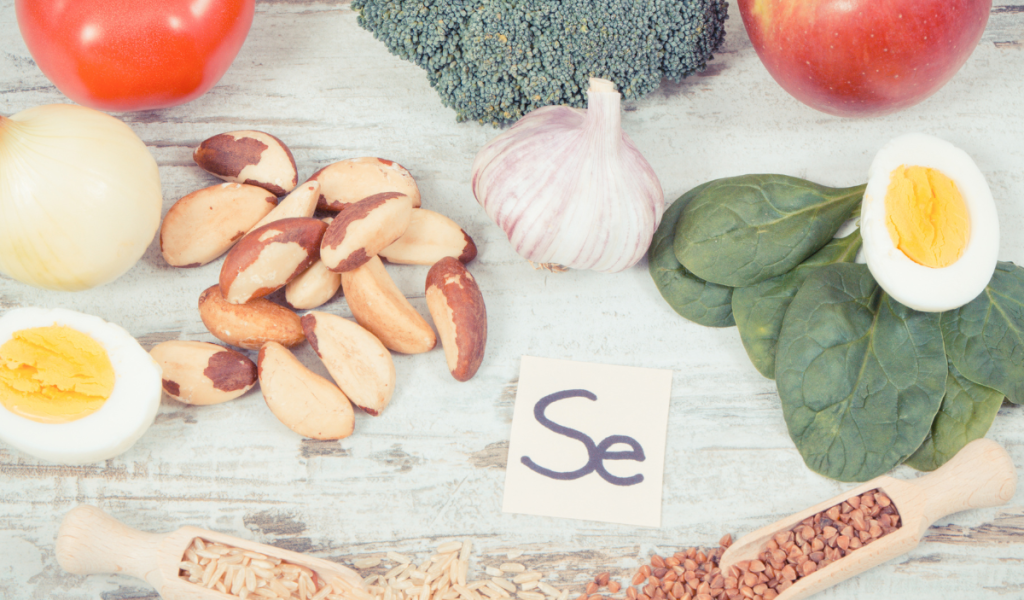
Dietary food sources for selenium include Brazil nuts, seafood, and eggs.
Because individual selenium status varies widely, we always perform routine testing of serum selenium before starting supplementation. A personalized treatment plan protects you from both deficiency and excess of selenium.
Looking Beyond Selenium: The Full Autoimmune Picture
Selenium is one piece of a much larger puzzle in autoimmune thyroid disease. We use a root-cause approach which considers the overall health of the gut, nutrient status, stress levels, and food and environmental triggers. All these factors play a role in auto-immune thyroid disease.
Our article, Addressing the Autoimmune Component of Thyroid Disease, walks you through this broader strategy.
Should You Consider Selenium Supplementation?
Based on current research, selenium helps to lower anti-thyroid antibody levels, particularly in patients with selenium deficiency. Of course, selenium does not a replace thyroid hormone therapy in the hypothyroid patient who needs it. However selenium is considered safe as an adjunct to a broader thyroid treatment plan.
Take the Next Step Toward Better Thyroid Health
Living with Hashimoto’s Thyroiditis can be overwhelming, especially when presented with conflicting information online. How can we help patients cut through all the noise? We use individualized testing for iodine and selenium, anti-thyroid antibody tracking, and thyroid treatment plan built around your clinical symptoms, history, laboratory results. Thus, providing a tailored treatment program with careful follow-up. In this way, we can reach a favorable outcome.
Mainstream endocrinology and has no concern for the auto-immune component of Hashimoto’s disease. Your mainstream endocrinologist is concerned only with managing thyroid function with T4 medication keeping the TSH within the normal range. At our TruemedMD clinic in Davie, Florida, we address the auto-immune component in multiple ways. If you are ready to find out whether selenium and a broader treatment program that addresses the autoimmune component make sense for you, reach out to schedule a consultation with our TruemedMD team today. Our medical director, Jeffrey Dach MD and team in Davie, Florida is ready to help you with a treatment plan grounded in medical research and tailored just for you.
Frequently Asked Questions
Does selenium cure Hashimoto’s disease?
No. Selenium may help lower thyroid antibody levels, but it does not cure Hashimoto’s or replace thyroid hormone therapy when that is medically necessary.
How much selenium is used in research on Hashimoto’s?
Most studies use around 200 micrograms daily, often as selenomethionine, though the right dose depends on testing your serum selenium level.
Can too much selenium be harmful?
Yes. Excess selenium can cause hair loss, brittle nails, and gastrointestinal symptoms, so testing for selenium level is important. Having said that, selenium toxicity is extremely rare, and I have never actually seen a case over my 60 years of medical practice inside and outside the hospital.
Does selenium help with iodine-related thyroid problems?
Selenium and iodine work together. As mentioned above, selenium deficiency and high dietary iodine intake may worsen oxidative stress and worsen the autoimmune activity in the thyroid.
Should I take selenium without talking to a doctor first?
Although selenium is a supplement at the health food store that does not require a doctor’s prescription, it is a good idea to check serum selenium level as part of medical evaluation before starting a treatment program for Hashimoto’s thyroiditis.
Articles with Related Interest:
All Articles on Selenium and Hashimoto’s Thyroid Disease by Jeffrey Dach MD