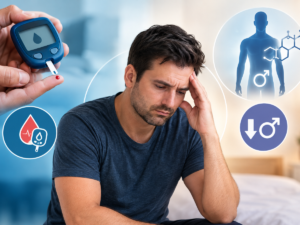

Men with type 2 diabetes are more likely than other men to have low testosterone, and they are also more likely to develop nerve and blood-vessel damage that affects sexual function. These problems can produce overlapping symptoms, but they are not the same condition and they are not treated the same way. It is well known that testosterone therapy is beneficial for the hypogonadal diabetic male.
30% of Diabetic Males Have Low Testosterone
In 2018, Dr. Sandeep Dhindsa and colleagues reviewed the strong association between type 2 diabetes, obesity (“diabesity”), and hypogonadotropic hypogonadism. Roughly one-third of men with type 2 diabetes have low testosterone with luteinizing hormone and follicle-stimulating hormone levels that are low or inappropriately normal. Sexual symptoms such as low libido, erectile difficulties, or fatigue are more common in these men than in eugonadal men with diabetes, although other complications can produce the same complaints. (1)
Complications of Diabetes
Diabetes injures nerves through long-term high blood glucose, oxidative stress, and microvascular disease. Sensory neuropathy can cause numbness, tingling, burning pain, or weakness. Autonomic neuropathy can disturb bladder function, sweating, heart-rate control, and the nerve signals required for erection.
In 2025, the American Diabetes Association Professional Practice Committee stated that diabetic autonomic neuropathy may cause erectile dysfunction and retrograde ejaculation in men. Screening for autonomic symptoms can include questions about erectile dysfunction. Diet and lifestyle modification with attention to serum glucose, weight, and blood pressure management remain the main tools for preventing or slowing neuropathy and improving quality of life. First line drug diabetic treatment with metformin or the botanical, berberine, may be helpful. (2)
Erectile dysfunction in diabetes is therefore usually multifactorial. Nerve damage, reduced blood flow, endothelial dysfunction, medications, mood disorders, and low testosterone can all contribute. A normal testosterone level does not rule out neuropathy as a cause of erectile dysfunction, and a low testosterone level does not prove that neuropathy is absent. For more on preventing diabetic complications with diet and lifestyle modification, see this article: Diabetes and Thiamine Deficiency.
Screening Diabetics for Low Testosterone and Erectile Dysfunction
In 2025, the American Diabetes Association Professional Practice Committee recommended that clinicians screen men with diabetes or prediabetes for erectile dysfunction, particularly when high cardiovascular risk, retinopathy, cardiovascular disease, chronic kidney disease, peripheral or autonomic neuropathy, longer diabetes duration, depression, hypogonadism, or unmet glycemic goals are present. The same section advises asking about sexual health (low libido and erectile dysfunction) and, if symptoms or signs of hypogonadism are found, measuring a morning serum total testosterone. We have expanded this to include a larger, more complete lab panel. (3)
Possible signs that warrant that conversation include persistently reduced sexual desire, erectile difficulty, fatigue, loss of muscle, and unfavorable body-composition change. One symptom is not diagnostic. Confirmation requires repeated morning testosterone measurement and clinical judgment; free testosterone, luteinizing hormone, and prolactin are added at our TruemedMD clinic.
Testosterone therapy does not treat diabetic neuropathy. If repeated testing confirms deficiency and symptoms are present, a clinician may consider testosterone for those hypogonadism symptoms, after reviewing benefits, risks, and alternatives such as weight loss. Neuropathy itself is managed by optimizing glucose and cardiovascular risk factors and by treating pain or autonomic symptoms directly. High dose thiamine and other supplements are also useful as discussed in this article: Thiamine Deficiency and Diabetes.
Testosterone should not be expected to restore damaged nerves.
The practical distinction is this: diabetes can raise the likelihood of low testosterone and, separately, can damage the nerves and vessels needed for sexual function. Morning testosterone testing helps decide whether hormone deficiency is part of the picture. Neuropathy symptoms should still be evaluated on their own, because the two problems may need different care.
Frequently Asked Questions
Does diabetic neuropathy cause low testosterone?
Not directly. Diabetes is associated with a greater likelihood of low testosterone, while diabetic neuropathy can independently affect sexual function through nerve damage.
Can diabetic neuropathy cause erectile dysfunction?
Yes, diabetic neuropathy can cause erectile dysfunction. Autonomic neuropathy can damage nerves involved in sexual function. Diabetes-related vascular disease and low testosterone may also contribute to erectile dysfunction.
Should men with diabetes have testosterone testing?
Men with diabetes who have symptoms or signs of testosterone deficiency may need testing. The ADA recommends a morning total testosterone measurement when such symptoms are present.
Conclusion:
Diabetes raises the odds of low testosterone. Diabetic neuropathy, especially autonomic neuropathy, can impair erections and cause erectile dysfunction (ED) through nerve and microvascular injury. The two problems often coexist but are not the same disease. Testosterone therapy is for confirmed symptomatic hypogonadism, not a treatment for diabetic neuropathy itself. At TruemedMD, we follow the 2026 ADA Standards of Care about screening for erectile dysfunction in the presence of neuropathy or hypogonadism, and measuring morning testosterone when hypogonadism symptoms are present. However, there is no medical evidence that testosterone “repairs” the diabetic neuropathy and diabetic nerves in humans. As usual, it is important to work closely with a knowledgeable physician who is readily accessible and who can monitor adverse side effects and adjust treatment.
If you are a diabetic male with erectile dysfunction interested in a more complete evaluation, we are ready to help. At the TruemedMD clinic, our medical director,Jeffrey Dach, MD provides a more complete laboratory panel which includes testosterone (free and total), LH, FSH, estradiol as a subset of a larger medical testing panel. Calcium score and vascular testing is also included.
Articles with Related Interest:
Improve Insulin Resistance in Diabetes
Thiamine Deficiency and Diabetes
Low Testosterone Diagnosis and Treatment
The Link Between Testosterone and Cardiovascular Health
Our Practice, Bioidentical Hormones and Natural Thyroid
References:
1. Dhindsa, Sandeep, et al. “Hypogonadotropic Hypogonadism in Men With Diabesity.” Diabetes Care, vol. 41, no. 7, 2018, pp. 1516–1525. https://diabetesjournals.org/care/article/41/7/1516/36411/Hypogonadotropic-Hypogonadism-in-Men-With
2. American Diabetes Association Professional Practice Committee. “12. Retinopathy, Neuropathy, and Foot Care: Standards of Care in Diabetes—2026.” Diabetes Care, vol. 49, Supplement 1, 2026, pp. S261–S276. https://doi.org/10.2337/dc26-S012
3. American Diabetes Association Professional Practice Committee. “4. Comprehensive Medical Evaluation and Assessment of Comorbidities: Standards of Care in Diabetes—2026.” Diabetes Care, vol. 49, Supplement 1, 2026. https://diabetesjournals.org/care/article/49/Supplement_1/S61/163931/4-Comprehensive-Medical-Evaluation-and-Assessment