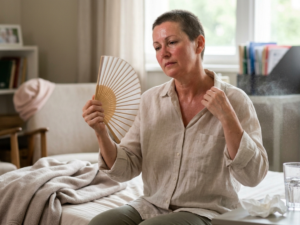
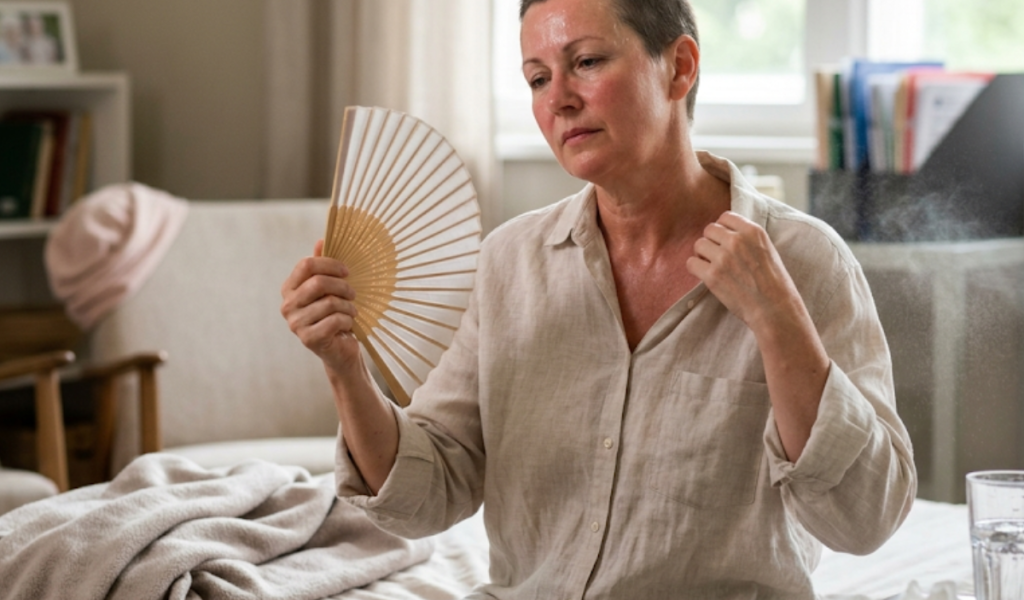
Finishing cancer treatment is supposed to feel like the hard part is over. Then the sweating starts, the sheets get soaked at 3 a.m., and you realize nobody warned you about this. For many breast cancer survivors, estrogen therapy is off the table because the oncologist emphatically advises against it.
That leaves breast cancer survivors searching for a doctor who can treat the insomnia, hot flashes and night sweats after cancer treatment without using estrogen HRT, wondering what will actually work. We commonly see this on a regular basis. Sadly, non-hormonal menopause drugs are mostly ineffective and dangerous. The safest and most effective treatment is estrogen hormone replacement.
Why Do Hot Flashes Get So Intense After Cancer Treatment?
Hot flashes after cancer treatment tend to hit harder and more often than natural menopause hot flashes. Chemotherapy, ovary removal, and aromatase inhibitor therapy can shut down estrogen production abruptly instead of gradually.
That sudden drop, often called chemotherapy-induced menopause, throws the body’s temperature regulation system off balance almost overnight. On one hand, natural menopause unfolds gradually over many years. However, on the other hand, treatment-induced menopause can happen quickly in a matter of weeks. The nervous system doesn’t have time to adjust, which is part of why these vasomotor symptoms feel so much more disruptive.
Why Are Cancer Survivors Told to Avoid HRT?
Estrogen is a growth factor for breast cancer cells. This is why oncologists will dogmatically advise against estrogen therapy for breast cancer survivors, thinking estrogen therapy increases the risk of recurrence. However if one actually takes the time to review the medical literature and the studies of hormone replacement in breast cancer survivors, we find that there is no increased recurrence in estrogen users.
However, when carcinogenic synthetic hormones are used, there is increased risk of breast cancer. The obvious solution is to avoid carcinogenic synthetic hormones. The actual hormone formula matters. Sadly, this is ignored by mainstream medicine, gynecologists and oncologists who lump all hormones together and dogmatically insist on avoiding all hormones, even when the medical literature shows better outcomes in breast cancer survivors who use natural estrogen, avoiding synthetic versions.
Can Bioidentical Hormones Be Used After Breast Cancer?
As mentioned above, traditional mainstream oncology dogmatically avoids estrogen for systemic hormone therapy in breast cancer survivors for fear of inducing increased breast cancer recurrence. In 2022, Dr. Avrum Bluming showed this fear of estrogen is irrational and unfounded, the creation of a medical myth. (4)
A 2022 review of the medical literature by Dr. Avrum Bluming reveals 26 studies of hormone replacement in breast cancer survivors. Of the 26 studies, 25 showed no increase in breast cancer recurrence. Only one study showed increased recurrence, the 2004 HABITS study by Dr. Lars Holmberg of Sweden. This HABITS study used the carcinogenic synthetic hormone, norethisterone together with another synthetic hormone, tamoxifen. This is a carcinogenic combination to be avoided since it caused a roughly 300 percent increased breast cancer recurrence. (1-4)
According to Dr. Avrum Bluming, this large increase in recurrence was due mostly to the subgroup of women also taking tamoxifen, a synthetic hormone associated with a phenomenon called tamoxifen resistance which leads to transformation of the breast cancer into an aggressive cell type. (1-2)(4)
In 2022, Dr. Avrum Bluming writes:
Twenty-five studies of HRT after a breast cancer diagnosis, published between 1980 and 2013, are discussed…Only 1 of the 25 studies, the HABITS trial, demonstrated an increased risk of recurrence, which was limited to local or contralateral, and not distant, recurrence….(4)
Estrogen is Actually Breast Cancer Protective in WHI Study
The 2004 WHI (Women’s Health Initiative) randomized controlled trial showed estrogen is actually breast cancer protective. In 2020, Dr. Rowan Chlebowski reported that, among women in the Women’s Health Initiative who had a prior hysterectomy and no prior breast cancer, conjugated equine estrogen (CEE) alone was associated with lower breast-cancer incidence and 40 percent reduction in breast-cancer mortality (hazard ratio 0.60, about a 40 percent reduction) (2).
We do not offer estrogen to active breast cancer patients. However, for breast cancer survivors who have been surgically cured with no active disease, this group may safely take bioidentical hormone therapy using the correct formula. This is more completely discussed in my two articles:
Hormone Replacement for Breast Cancer Survivors Part One
Hormone Replacement for Breast Cancer Survivors Part Two
This is why we take the time to go through bioidentical hormone therapy after a breast cancer diagnosis carefully and individually with each patient instead of dogmatically denying the patient the benefits of hormone replacement. For a deeper look at the published research, see Dr. Dach’s review of breast cancer survivors and bioidentical hormones. And for more on this topic see: Can Bioidentical Hormones Be Used After a Breast Cancer Diagnosis in Breast Cancer Survivors?
What Non-Hormonal Medications are Offered for Hot Flashes?
Your conventional doctor may offer you non-hormonal drugs in an attempt to treat menopausal symptoms of hot flashes and night sweats. I would strongly advise against SSRI antidepressants, gabapentin, SNRIs, clonidine and other drugs. These drugs have marginal efficacy and are a bad choice. We have found that most breast cancer survivors can safely take bioidentical hormone replacement with full relief of menopausal symptoms.
What is Veozah and Why is it Dangerous?
Your conventional doctor may offer a new non-hormonal drug called Veozah (fezolinetant) to treat menopausal symptoms of hot flashes and night sweats. Veozah acts as a neurokinin 3 (NK3) receptor antagonist, blocking neurokinin B (NKB) in the brain’s temperature control center to restore hormonal balance and reduce heat surges. Veozah is perhaps the only effective non-hormonal drug for hot flashes and night sweats.(5-6)
What happens when women stop the Veozah drug? The night sweats and hot flashes return with a vengeance. This is a drug withdrawal effect commonly observed for all neurotransmitter receptor blocking drugs. The neurons compensate for the Veozah drug by making more receptors which are upregulated. This is the same mechanism for drug addiction with other neurotransmitter blocker drugs. When the patient stops taking the Veozah drug, the withdrawal effects of debilitating night sweats and hot flashes force the patient to go back on the drug. This is the definition of an addictive drug. It is impossible to get off. The patient discovers she must be on Veozah for life or suffer the withdrawal effects of even worse debilitating night sweats and hot flashes. (5-6)
Estrogen Deficiency of Menopause Leads to Chronic Degenerative Diseases
The main danger of Veozah is shared by all the other non-hormonal menopausal drugs. They are not a treatment for menopause, which is defined as an estrogen deficiency state. The elimination of hot flashes and night sweats creates a false sense of security. The reality is non-hormonal menopause drugs do not prevent the onset of chronic degenerative diseases of estrogen deficiency. Only estrogen hormone replacement prevents the osteoarthritis, osteoporosis, coronary artery disease, dementia, vaginal atrophy and genitourinary syndrome, fatigue and weight gain of menopause. These are all chronic degenerative diseases caused by an estrogen deficiency state. (7-19)
We have found that most breast cancer survivors can safely take bioidentical hormone replacement with full relief of menopausal symptoms.
What Lifestyle Changes Actually Make a Difference?
Simple, steady changes in your daily routine can noticeably lower how often hot flashes happen and how strong they feel. These are changes which avoid hot flash triggers such as caffeine, alcohol, spicy food, hot drinks, and overheated rooms.
Dressing in layers of clothing that you can quickly remove, keeping a fan close, and lowering the bedroom temperature at night all help with night sweats. Regular moderate exercise and maintaining a healthy weight are also linked to fewer and milder hot flashes over time, though results differ from one person to another.
If diet and lifestyle changes are not working, we have found that most breast cancer survivors can safely take bioidentical hormone replacement with full relief of menopausal symptoms.
Can Stress and Cortisol Make Hot Flashes Worse?
Yes. Elevated stress hormones can amplify how the body experiences a hot flash and how long it lasts. Research suggests chronic stress and elevated cortisol may worsen menopausal symptoms, and breast cancer survivors are no exception.
Cancer treatment itself is a major stressor, and the body does not always separate emotional stress from physical stress. Supporting adrenal function through sleep, nutrition, and stress management is a piece of the puzzle that should not be overlooked.
Do Mind-Body Practices Actually Help?
Cognitive behavioral therapy has some of the strongest supporting research among non-drug approaches for hot flashes. It does not stop hot flashes, but it can reduce how distressing they feel and how much they disrupt daily life.
Paced breathing, mindfulness-based stress reduction, and clinical hypnosis have also shown benefit in some studies. Acupuncture is commonly used too, though the research results are mixed. If mind-body practices and diet and lifestyle changes are not working, we have found that most breast cancer survivors can safely take bioidentical hormone replacement with full relief of menopausal symptoms. (3)
What About the Sleep and Mood Symptoms That Come With Hot Flashes?
Hot flashes rarely travel alone. Sleep problems, irritability, and anxiety frequently show up alongside them, and each one can make the others worse. Patients often ask us whether hormone imbalances can cause anxiety and panic attacks, and the honest answer is that fluctuating hormones absolutely can affect mood.
The same is true for sleep. If you are also dealing with disrupted rest, it is worth understanding how sleep problems can worsen during hormonal transitions. Getting a good night’s sleep is critical to our health. Insomnia and sleep disturbance almost never resolves on its own. Again, bioidentical hormone replacement is the most effective therapy.
When Should You Talk to a Doctor?
If hot flashes are interfering with sleep, work, or daily functioning, it is time for a real evaluation rather than more guessing. A thorough hormone and thyroid lab workup can rule out other contributing factors and clarify which options make sense for you. One of those factors is an overactive thyroid, which can also cause sweating and heat intolerance.
We work with breast cancer survivors in South Florida regularly through our hormone and thyroid evaluation process. For patients who want a deeper resource, go to our BOOKS PAGE. This page includes a free guide book on navigating menopause.
Managing hot flashes after cancer treatment without HRT takes patience and doesn’t always bring relief. We have found that most breast cancer survivors can safely take bioidentical hormone replacement with full relief of menopausal symptoms, better quality sleep, and relief from hot flashes and night sweats.
Menopause is an Estrogen Deficiency State
Menopause is an estrogen deficiency state associated with the onset of chronic degenerative disease. Non-hormonal drugs used to treat menopause do not contain estrogen and do not prevent the onset of chronic degenerative diseases such as vaginal atrophy, recurrent urinary tract infections, osteoarthritis, osteoporosis with bone fractures, coronary artery disease, dementia, type two diabetes, fatigue, weight gain and dry eye syndrome. Prevention and complete relief is achieved with bioidentical hormone replacement. (7-19)
In 2022, Dr. Susan Davis writes:
The cardinal symptoms of menopause, and adverse health sequelae, are due to loss of ovarian estrogen production. Consequently, menopausal hormone therapy (MHT) that includes estrogen or an estrogenic compound ameliorates menopausal symptoms, while preventing menopause-associated bone loss and cardiometabolic changes. (7)
In 2024, Dr. Jane Yang writes:
As women approach perimenopause and menopause, the dramatic fluctuations and eventual substantial decline in circulating estrogen levels affect almost all organ systems, including urogenital, reproductive, cardiovascular, neurologic, psychiatric, skeletal, dermatologic, immune, and digestive systems. These symptoms, first acute then chronic, have a profound and overall negative impact on the quality of life of women, and most symptoms can be alleviated with estrogen therapy. (8)
In 2020, Dr. John Paciuc writes:
As longevity expands, women are spending a third of their existence in menopause and beyond. The vast majority suffer from symptoms that negatively impact their quality of life… Estrogen remains the most effective treatment for both VMS (hot flashes and night sweats) and GSM (vaginal atrophy and recurrent urinary tract infections), for osteoporosis prevention, and for symptom relief as well as chronic disease prevention in women who experience premature menopause whether from primary ovarian insufficiency (POI) or iatrogenic etiologies…Finally reviewed is the compelling argument from notable thought-leaders that estrogen should be considered for primary prevention of cardiovascular disease as well as the prevention of chronic disease. (9-19)
If you are a breast cancer survivor with menopausal symptoms and ready to build a treatment plan, Dr. Jeffrey Dach invites you to schedule an evaluation at the TruemedMD clinic in Davie, Florida, or call (954) 792-4663.
Frequently Asked Questions
What causes hot flashes after cancer treatment?
Chemotherapy, ovary removal, and aromatase inhibitors can cause a sudden drop in estrogen. This abrupt change disrupts the body’s temperature control, often causing more intense hot flashes than does natural menopause.
Why Are Breast Cancer Survivors Advised to Avoid Traditional HRT?
Estrogen is a growth factor for active breast cancer. Most oncologists recommend avoiding estrogen and try non-hormonal alternatives first. Individual cases vary based on cancer cell type, whether aggressive or indolent.
We do not offer estrogen to active breast cancer patients. However, for breast cancer survivors who have been surgically cured and have no active disease, this group may safely take bioidentical hormone therapy using the correct formula.
What non-hormonal medications help with hot flashes?
Various non-hormonal drugs offered by your conventional doctor such as SSRIs, SNRIs, gabapentin, and clonidine are not recommended. These are bad drugs with very little or perhaps marginal efficacy.
Do lifestyle changes really reduce hot flashes?
Yes. Avoiding common triggers like caffeine, alcohol, and overheated rooms, along with regular exercise and layered clothing, can meaningfully reduce hot flash frequency and intensity.
Can stress make hot flashes worse after cancer treatment?
Elevated cortisol and chronic stress can intensify how hot flashes feel and how long they last. Supporting stress management is a useful addition to a broader treatment plan.
Articles with Related Interest
The Dangers of Non-Hormonal Menopause Drugs
Hormone Replacement for Breast Cancer Survivors Part One
Hormone Replacement for Breast Cancer Survivors Part Two
Bioidentical Hormones for Breast Cancer Survivors Video Presentation
References:
1. Holmberg, Lars, and Harald Anderson. “HABITS (Hormonal Replacement Therapy After Breast Cancer—Is It Safe?), a Randomised Comparison: Trial Stopped.” The Lancet, vol. 363, no. 9407, 2004, pp. 453–55. https://pubmed.ncbi.nlm.nih.gov/14962527/
2. Chlebowski, Rowan T., et al. “Association of Menopausal Hormone Therapy With Breast Cancer Incidence and Mortality During Long-term Follow-up of the Women’s Health Initiative Randomized Clinical Trials.” JAMA, vol. 324, no. 4, 2020, pp. 369–80. https://pmc.ncbi.nlm.nih.gov/articles/PMC7388026/
3. Mann, Eleanor, et al. “Cognitive Behavioural Treatment for Women Who Have Menopausal Symptoms After Breast Cancer Treatment (MENOS 1): A Randomised Controlled Trial.” The Lancet Oncology, vol. 13, no. 3, 2012, pp. 309–18. https://www.sciencedirect.com/science/article/pii/S1470204511703643
4. Bluming, Avrum Zvi. “Hormone replacement therapy after breast cancer: it is time.” The Cancer Journal 28.3 (2022): 183-190.
5. Lederman, Samuel, et al. “Fezolinetant for treatment of moderate-to-severe vasomotor symptoms associated with menopause (SKYLIGHT 1): a phase 3 randomised controlled study.” The lancet 401.10382 (2023): 1091-1102.
6. Shaukat, Ayesha, et al. “Veozah (Fezolinetant): A Promising Non‐Hormonal Treatment for Vasomotor Symptoms in Menopause.” Health Science Reports 6.10 (2023): e1610.
7. Davis, Susan R., and Rodney J. Baber. “Treating menopause—MHT and beyond.” Nature Reviews Endocrinology 18.8 (2022): 490-502.
8. Yang, Jane L., et al. “Estrogen deficiency in the menopause and the role of hormone therapy: integrating the findings of basic science research with clinical trials.” Menopause (New York, NY) 31.10 (2024): 926.
9. Paciuc, John. “Hormone therapy in menopause.” Hormonal Pathology of the Uterus (2020): 89-120.
10. Cheng, Jian, et al. “Estrogen deficiency as a common driver and integrative mechanism in osteoporosis-osteoarthritis comorbidity.” Molecular Medicine Reports 34.1 (2026): 200.
11. Mauvais-Jarvis, Franck, et al. “The Role of Estrogens in Control of Energy Balance and Glucose Homeostasis.” Endocrine Reviews, vol. 34, no. 3, 2013, pp. 309–38. https://pmc.ncbi.nlm.nih.gov/articles/PMC3660717/
12. Biglia, Nicoletta, et al. “Vasomotor Symptoms in Menopause: A Biomarker of Cardiovascular Disease Risk And Other Chronic Diseases?” Climacteric 20.4 (2017): 306-312.
13. Lobo, Rogerio A., et al. “Prevention of Diseases After Menopause.” Climacteric 17.5 (2014): 540-556.
14. McCarthy, Micheline, and Ami P. Raval. “The Peri-Menopause In A Woman’s Life: A Systemic Inflammatory Phase That Enables Later Neurodegenerative Disease.” Journal of Neuroinflammation 17 (2020): 1-14.
15. Jett S, Schelbaum E, Jang G, et al. Ovarian Steroid Hormones: A Long Overlooked But Critical Contributor To Brain Aging And Alzheimer’s Disease. Front Aging Neurosci. 2022;14:948219.
16. Peters KJ. What Is Genitourinary Syndrome of Menopause and Why Should We Care? Perm J. May 2021;25.
17. Kodoth V, Scaccia S, Aggarwal B. Adverse Changes in Body Composition During the Menopausal Transition and Relation to Cardiovascular Risk: A Contemporary Review. Women’s Health Rep (New Rochelle). 2022;3(1):573-581.
18. Maki PM, Henderson VW. Cognition and the Menopause Transition. Menopause. Jul 2016;23(7):803-5.
19. Mosconi L, Berti V, Dyke J, et al. Menopause Impacts Human Brain Structure, Connectivity, Energy Metabolism, and Amyloid-Beta Deposition. Sci Rep. Jun 9 2021;11(1):10867.
20. Tehalia, Manpreet Kaur, et al. “Estrogen Deficiency in Menopause: A Major Contributor to Cartilage Degeneration and Osteoarthritis: A Systematic Review and Meta-Analysis.” Journal of Menopausal Medicine 32.1 (2026): 18.
21. Huang, Xi, et al. “The role of estrogen in mitochondrial disease.” Cellular and Molecular Neurobiology 45.1 (2025): 68.