
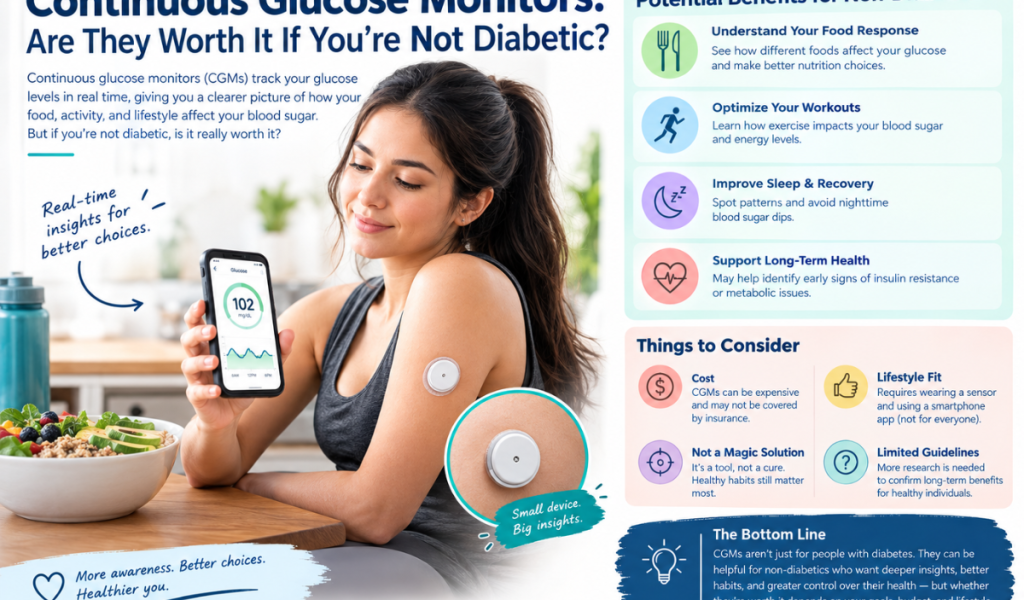
A continuous glucose monitor (CGM) tracks blood sugar in real time through a small sensor worn on the skin. This is a nifty gadget for diabetics who need to check their blood sugar before and after meals. What about non-diabetics who have normal blood sugar and no diagnosis of diabetes or prediabetes? Should non-diabetics also use the CGM, or is it a waste of time for them?
Interest in these CGM devices has expanded beyond insulin dependent diabetics to otherwise healthy adults curious about how food intake, stress, sleep, and exercise influences serum glucose throughout the day. For non-diabetics, a CGM may offer useful insights about their health, however it is not required. So, before you waste time and money on something that is non-essential, this article explains the use of CGM for the non-diabetic.
What is the Benefit of a CGM for the Non-Diabetic.
Perhaps the most useful CGM information comes from serial or repeated readings which show blood glucose trending over time. Single readings are somewhat limited. Serial readings however, capture the blood sugar rise and fall after meals and before and after exercise. A single fasting blood draw is OK, but does not give the big picture like serial measurements over time.
Use of a CGM for the non-diabetic, normal healthy person usually involves observing the effect on blood sugar for specific food types, portion sizes, and don’t forget stress. Some people notice sharp glucose spikes shortly after eating carbohydrates, and low blood sugar (hypoglycemia) later on.
Why Are Healthy People Wearing CGMs Now?
Interest has grown because glucose swings can appear years before prediabetes or diabetes shows up on standard laboratory tests. Observing serial measurements provides a real-time pattern that gives early warning signs.
Patients usually ask questions about CGMs after afternoon energy crashes, sugar cravings, or unexplained weight gain. These symptoms are often related to the body’s response to insulin, whether insulin sensitive or insulin resistant. This, in turn, is closely linked to hormone balance which may be disturbed after age 45 during pre-menopause and early menopause, a time of metabolic and hormonal shifts with changing insulin sensitivity.
Can a CGM Reveal Early Insulin Resistance?
Yes, of course. Consistently elevated blood sugar readings or a slow return to normal blood sugar levels after meals can signal early insulin resistance, even when fasting glucose and hemoglobin A1C are still within normal range.
Insulin resistance may develop insidiously without obvious signs or symptoms. On the other hand, some are symptomatic with typical symptoms such as fatigue, weight gain around the midsection, and difficulty losing weight. The symptoms may be present for years before insulin resistance shows up on the standard metabolic panel. A CGM reading may alert the patient to the presence of early insulin resistance and suggest seeking medical care and further laboratory testing.
How Are Blood Sugar, Stress, and Hormones Connected?
What is the connection between chronic stress, cortical and blood sugar? Cortisol is our stress hormone which is released by the adrenal glands. Cortisol is a glucocorticoid, meaning it raises blood glucose by signaling the liver to convert stored up glycogen into sugar, which is then released into the bloodstream. Over time, chronic stress takes its toll on the adrenal glands.
A CGM may be useful for people living with chronic stress. The serial CGM blood sugar readings may show chronically elevated blood glucose even though you may be fasting. Chronic stress and elevated cortisol can wreck havoc on your body and cause insulin resistance with elevated blood sugar. Monitoring blood sugar with a CGM makes the numbers visible, explaining how you feel.
What Are the Limitations of CGM Data for Non-Diabetics?
CGMs are intended for diabetics, so the blood sugar reference range that come with the device may not be valid for healthy non-diabetic adults. An alarming blood sugar spike may be a temporary response, and nothing to worry about.
CGM sensors can also drift in accuracy, react to state of hydration or actual body placement. This may create anxiety in people who then become obsessed with their CGM numbers. CGM data without concomitant clinical judgement can lead to unnecessary anxiety leading to overly restrictive eating habits or even eating disorders.
Who Is Most Likely to Benefit From Wearing a CGM?
People with a family history of diabetes, unexplained fatigue, stubborn weight gain, or existing hormone imbalances tend to get the most useful information from a CGM device. CGM can be used to fine-tune performance in athletes. In addition, people experimenting with specific diets may find CGM.
If you are one of these people, check your blood sugar serially for a few weeks with a CGM machine and present the data to your doctor. The subsequent conversation may explain the underlying metabolic disorder causing your symptoms.
How to Interpret the Data?
The real value of using a CGM comes with serial measurements over days and weeks. A single reading by itself is not all that useful.
Once you have good CGM data, a more complete laboratory evaluation adds even more value. Interpret the CGM data together with other tests, the serum insulin, thyroid tests, and other hormone tests, providing a more complete picture.
How to Buy a CGM?
Some CGMs are now sold over the counter (OTC) to non-diabetics, normal people without diabetes. Depending on the manufacturer and your state regulations, your CGMs may require a doctor’s prescription. Cost and insurance coverage varies widely, since most insurance plans limit reimbursement to diabetics.
Single blood sugar readings are not as useful as serial readings, providing a window into hormonal shifts, stress, sleep, and underlying metabolic abnormalities.
If you are interested in a CGM, continuous glucose monitor, schedule a consultation with our office and we can help.
Frequently Asked Questions
Do I need a prescription for a CGM if I am not diabetic?
It depends on the device. Some CGMs are sold directly to consumers, while others still require a doctor’s order depending on the brand and state.
Can a CGM help with weight loss?
Yes, of course. A CGM gives you blood sugar information, and how specific foods affect your blood glucose. This helps you make more informed eating choices.
How long should I wear a CGM to get useful information?
Most people wear a CGM for two to four weeks to capture blood sugar data before and after meals, exercise workouts, and even useful before and after stressful events.
Is CGM data accurate for people without diabetes?
CGMs are generally accurate for tracking trends, realizing that the lab normal reference range is for diabetics.
Can hormone imbalances affect the readings on a CGM?
Yes. Cortisol, thyroid hormones, and insulin resistance can all influence glucose levels, which is why CGM data is often more useful when combined with hormone testing.
Articles with Related Interest:
Improve Insulin Resistant Diabetes