
The scale rarely lies, but it often confuses patients trying hard to make sense of it on their own. Many patients tell us the same story after turning 40. Nothing about their diet or activity level has changed, yet the number keeps climbing anyway. This pattern has a clear, well-documented name, and understanding hormonal weight gain is often the missing piece that finally makes it all clear.
Why the Same Diet Stops Working After 40
Metabolism does slow with age, but that alone rarely explains the kind of stubborn weight gain patients describe to us in our office. The bigger shift happening underneath is hormonal, not just chronological.
As key hormones decline through your 40s, the body starts storing fat differently than it used to, particularly around the abdomen. This is one of the clearest signs of hormonal weight gain rather than a simple calorie imbalance. Consulting a functional medicine doctor for hormones can help identify underlying hormonal changes and support a personalized approach to better balance and overall wellness.
Insulin sensitivity also tends to decline during this decade, meaning the body clears blood sugar less efficiently and stores more of it as fat, even when meals stay consistent with previous years.
The Hormones Behind the Shift
Several hormones influence how the body manages fat, energy, and appetite. When these shift after 40, weight gain often becomes the first noticeable symptom, even before other signs appear. Understanding the relationship between hormonal factors affecting weight can help explain why changes in body composition become more common with age.
None of these hormones work in isolation either, which is why symptoms often overlap and make self-diagnosis difficult without proper testing.
For Women: Estrogen and Progesterone Decline
As women approach perimenopause and menopause, declining estrogen changes how the body distributes fat, often shifting it toward the midsection instead of the hips and thighs. Research on menopausal hormone replacement health benefits shows that restoring estrogen levels can help prevent this weight gain and reduce visceral fat accumulation.
Progesterone decline adds another layer, frequently contributing to bloating, water retention, and disrupted sleep that makes healthy habits harder to maintain.
Thyroid function often shifts during this same window, and the overlap between perimenopause symptoms and thyroid changes makes self-diagnosis especially unreliable without lab work — particularly since TSH alone is often inadequate for properly monitoring thyroid treatment.
Patients navigating this transition often find it helpful to understand the broader picture of female hormone imbalance and when to seek care before assuming weight gain alone means nothing else is wrong.
For Men: Declining Testosterone
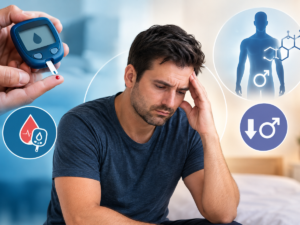
Men experience their own version of this shift. Testosterone naturally declines with age, and lower levels are directly linked to reduced muscle mass and increased fat storage.
Since muscle burns more calories at rest than fat, this shift quietly lowers daily calorie burn, even without any change in diet.
Lower testosterone is also linked to increased visceral fat around the organs, a type of fat associated with higher inflammation throughout the body. This connection highlights the importance of testosterone and metabolic health, particularly when evaluating changes in body composition, energy levels, and overall well-being. We cover this connection in more depth in our article on testosterone and its wider health benefits in men.
Cortisol: The Hormone Nobody Blames Enough
Stress hormones deserve far more attention in this conversation than they usually get. Chronically elevated cortisol encourages fat storage specifically around the abdomen, regardless of gender.
This becomes especially relevant after 40, when recovery from stress slows down, and cortisol tends to stay elevated longer after any given stressful event.
Poor sleep worsens this cycle further. Elevated cortisol disrupts deep sleep, and the resulting fatigue often drives cravings for quick energy from sugar and refined carbohydrates the next day. Our detailed guide on how chronic stress and elevated cortisol affect the body explains this cycle in full. If you are considering bioidentical hormones after breast cancer, it is important to discuss your individual health history and treatment options with a qualified healthcare provider.
How to Know If Hormones Are Behind Your Weight Gain
Unexplained weight gain rarely travels alone. It often shows up alongside fatigue, mood changes, sleep disruption, or reduced motivation. These symptoms may be associated with hormonal changes and weight gain, although other health conditions and lifestyle factors can also contribute. Identifying the underlying cause can help guide appropriate testing and treatment.
Our article on common symptoms of hormone imbalance you should never ignore walks through the fuller pattern most patients recognize once it is explained clearly.
The only reliable way to confirm what is happening is through proper lab testing rather than guesswork or trial and error with diet changes. This is especially true for insulin resistance, where newer options like Ozempic and other GLP-1 receptor agonists are increasingly discussed, but should only be considered once lab work confirms what’s actually driving the weight gain.
Waiting too long to test often means the underlying imbalance has more time to affect other systems, including sleep quality, mood stability, and long-term metabolic health.
What Actually Helps
Addressing hormonal weight gain starts with identifying which hormones are actually out of range, not assuming the answer before testing confirms it.
We recommend reviewing our patient checklist for getting hormone levels tested so you know what to expect at your first visit and which markers matter most. Choosing a functional medicine doctor can also help you find a provider who takes a personalized approach to evaluating your hormone levels, symptoms, and overall health.
From there, treatment is built around your specific results, whether that means bioidentical hormone therapy, thyroid support, or a combination tailored to your body.
Diet and exercise still matter throughout this process, but they work far better once the underlying hormonal picture is corrected rather than fought against.
Frequently Asked Questions
Is weight gain after 40 always hormonal?
Not always, but persistent gain despite consistent habits is a strong signal worth investigating through proper hormone testing rather than diet alone.
Can hormone therapy actually reverse this weight gain?
Restoring hormones to a healthy range often helps the body respond normally to diet and exercise again, though results vary by individual.
Do men experience this as much as women?
Yes, though the pattern looks different. Declining testosterone in men produces similar abdominal weight gain through reduced muscle mass.
What tests confirm hormonal weight gain?
We typically evaluate thyroid function, cortisol, and sex hormones like estrogen, progesterone, or testosterone depending on your symptoms and history.
Is this reversible without medication?
Lifestyle changes help, but when hormone levels are genuinely low, most patients need targeted treatment alongside diet and exercise for lasting results.
Ready to Get Real Answers
Weight gain after 40 is not simply about willpower, and blaming yourself for it rarely changes the outcome. Frustration alone does not correct a hormone panel, and neither does another round of the same diet that used to work.
If your habits have not changed but your body has, hormonal weight gain may be the honest explanation you have been missing. Contact our office today to schedule a consultation and find out what your labs actually show.