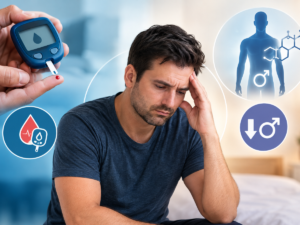

Metformin and hormone therapy are often prescribed for different reasons. A woman may take metformin for insulin resistance in polycystic ovary syndrome (PCOS) and later decide to start menopausal hormone therapy. A man with low testosterone may also need metformin for type 2 diabetes. Metformin and estrogen or testosterone therapy can be used together. They do not share a clearance pathway, and have no direct interaction.
Metformin lowers glucose production by the liver and improves insulin sensitivity. The kidneys clear metformin from the circulation. Metformin is not broken down by the liver enzymes that process many other drugs. Testosterone and estrogen are handled differently, and are metabolized by the liver. In general, the two drugs are independent and do not have any worrisome interactions.
Both metformin and hormone dosage changes should be guided and followed with routine laboratory testing: serum glucose, kidney function, and hormone labs.
Why Are Metformin and Hormone Therapy Used Together?
Metformin and hormone therapy are usually prescribed for different medical reasons, but some patients may need both as their health needs change. For example, a woman may take metformin to improve insulin resistance associated with PCOS and later consider hormone therapy for symptoms related to perimenopause or menopause. Similarly, a man receivingtestosterone replacement therapy may also need metformin for insulin resistance or type 2 diabetes.
How Hormones Influence Blood Sugar and Insulin Sensitivity
Hormones and blood sugar are more connected than most patients realize.
Declining estrogen during perimenopause and menopause is linked to reduced insulin sensitivity, which may lead to hormonal weight gain in women from estrogen deficiency after menopause.
In 2013, Dr. Mauvais-Jarvis Franck reviewed human and animal evidence that estrogen acts in muscle, liver, adipose tissue, and the brain to support insulin sensitivity, energy expenditure, and fat distribution. Dr. Franck states that estrogen deficiency promotes metabolic dysfunction that predisposes to obesity, the metabolic syndrome, and type 2 diabetes, and that the menopausal drop in circulating estrogen is accompanied by increased intra-abdominal fat. (9)
Testosterone works differently. Low testosterone in men is associated with increased insulin resistance and more visceral fat. Restoring testosterone to a healthy range often improves how the body responds to insulin over time.
Cortisol matters too. Chronic stress keeps this hormone elevated, and elevated cortisol pushes blood sugar higher regardless of what other hormones are doing.
Metformin for PCOS
In 2023, Dr. Helena Teede and the international PCOS guideline group recommended metformin mainly for the metabolic features of Polycystic Ovary Syndrome (PCOS). Metformin improves insulin sensitivity and decreases insulin resistance. Metformin’s benefit for fertility less consistent. Insulin resistance is common in PCOS and contributes to higher androgens and irregular menstrual cycles. In the United States use of metformin for improving insulin sensitivity in PCOS is considered off-label use. (1)
Which is Best, Oral or Transdermal Estrogen?
As mentioned above, menopausal estrogen deficiency increases insulin resistance and central weight gain. The treatment is estrogen therapy. Which estrogen is preferred, oral or transdermal? Oral estrogen passes through the liver first. Transdermal estrogen does not. This is a huge difference and the reason why transdermal is preferred.
In 2008, Dr. Marianne Canonico reviewed estrogen studies examining risk for clot formation and venous thromboembolism. Oral estrogen raised the odds of a first venous thromboembolism about 2.5-fold. Transdermal estrogen did not raise that risk. The conclusion is the estrogen delivery route is important, as transdermal is safer with less risk for blood clots. For this reason, at the TruemedMD clinic, we avoid oral estrogen and use transdermal estrogen instead. The estrogen is balanced with a complete bioidentical hormone program using progesterone, testosterone and supporting supplements. (2)
Estrogen Therapy Reduces New Cases of Diabetes
Estrogen therapy prevents new cases of diabetes in post menopausal women as demonstrated in 2004, by Dr. Karen Margolis who reported the Women’s Health Initiative 2002 estrogen-plus-progestin(MPA) randomized controlled trial. Treated diabetes occurred in 3.5 percent of the hormone group and 4.2 percent of the placebo group, a hazard ratio of 0.79. Although there is a benefit here in preventing new onset diabetes, estrogen is not generally considered a diabetes drug. Note: We use two different types of estrogen for bioidentical hormones replacement, estradiol and estriol. (3)
Testosterone in Males Improves Diabetic Markers
Low testosterone in men with obesity or type 2 diabetes tracks with more visceral fat and lower insulin sensitivity. Restoring testosterone can improve body composition and Hemoglobin A1c.
In 2016, Dr. Sandeep Dhindsa and colleagues found that 24 weeks of testosterone in men with type 2 diabetes and hypogonadotropic hypogonadism improved insulin sensitivity by about 32 percent, increased lean body mass, and reduced body fat. (4)
In 2016, Dr. Giovanni Corona and colleagues pooled 59 randomized trials. Testosterone reduced fat mass, increased lean mass, and lowered fasting glucose and insulin resistance, with clearer effects in men who already had metabolic disease. (5)
Testosterone and Remission from Diabetes
In 2019, Dr. Ahmad Haider and colleagues described a registry observational trial in which152 hypogonadal men with type 2 diabetes were followed for up to 12 years on testosterone injections. Fifty One men (51) met the criteria for complete remission of diabetes by the last visit. Unfortunately, there was no untreated control group. Even so, I find this information very useful indicating a testosterone benefit for the diabetic male. (6)
Not every trial agrees.
In 2024, Dr. Shalender Bhasin and colleagues reported the TRAVERSE diabetes substudy. Among men with hypogonadism and prediabetes or diabetes, testosterone did not slow progression to diabetes and did not improve glucose or A1C compared with placebo. I consider this trial flawed and deviates from other studies showing testosterone has clear benefits for the diabetic male. (7)
Metformin Laboratory Monitoring
Laboratory monitoring is straightforward. Fasting glucose and hemoglobin A1C (HgbA1c) should show both HgbA1c and glucose trending down with metformin. Creatinine and eGFR are useful because metformin requires good renal function and is unsafe when kidney function is too low. Hormone levels are checked according to the product used. Metformin can cause low B12, so serum vitamin B12 testing is the metformin-specific add-on. Urinary methylmalonic acid can help confirm a low B12. For more information on metformin, see this article: Metformin the Anti-Aging Miracle Drug.
Metformin and 13 Percent Annual Increase in B12 Deficiency
In 2016, Dr. Vanita Aroda reported the Diabetes Prevention Program Outcomes Study finding that each year of metformin use raised the odds of biochemical B12 deficiency by about 13 percent. The American Diabetes Association advises considering periodic B12 checks during long-term metformin use, especially if anemia or neuropathy is present. B12 deficiency can contribute to neuropathy symptoms. (8)
Working With a Doctor Before You Combine Anything
Metformin and hormone therapy can be combined safely. However it is important to choose the right functional medicine doctor for hormone health. We suggest a health care provider with experience and expertise in prescribing the combination of metformin and hormone replacement.
Talk to Your Doctor Before Combining Treatments
If you are already considering combining metformin with considering hormone therapy, contact our medical director, Jeffrey Dach MD at TruemedMD to schedule a visit and enjoy the benefits of a higher level of care.
Frequently Asked Questions
Does metformin interact directly with bioidentical hormones?
There is no direct drug interaction, but hormone changes affect insulin sensitivity, which can influence how well metformin controls blood sugar over time.
Can metformin help with PCOS-related hormone imbalance?
Metformin is commonly used off-label to improve insulin resistance in PCOS, which can indirectly help regulate cycles and reduce related hormone symptoms.
Will starting hormone therapy change my metformin dose?
It might, but only your doctor should adjust dosing, based on follow-up labs rather than assumptions about how the hormones are working.
Is metformin safe long term while on testosterone therapy?
Yes, metformin is safe for most patients. However, monitor kidney function and B12 levels periodically, regardless of hormone treatment status.
What labs confirm it is safe to combine metformin and hormone therapy?
Fasting glucose, A1C, kidney function, and hormone-specific panels together give the clearest picture of how the combination is working.
Conclusion: The combination of metformin with hormone therapy is reasonable when each treatment is indicated. Metformin treats insulin resistance or diabetes. Hormone therapy treats menopause symptoms or confirmed testosterone deficiency. Testosterone can improve body composition and, in some trials, insulin sensitivity, fasting blood sugar and Hemoglobin A1c. Obviously, there is no reason to avoid hormone therapy for a patient already on metformin.
Articles with Related Interest:
Metformin the Anti-Aging Miracle Drug
PCOS and Insulin Resistance: Breaking the Hormone-Diabetes Cycle
References:
1. Teede, Helena J., et al. “Recommendations from the 2023 International Evidence-based Guideline for the Assessment and Management of Polycystic Ovary Syndrome.” The Journal of Clinical Endocrinology & Metabolism, vol. 108, no. 10, 2023, pp. 2447–2469. https://doi.org/10.1210/clinem/dgad463
2. Canonico, Marianne, et al. “Hormone Replacement Therapy and Risk of Venous Thromboembolism in Postmenopausal Women: Systematic Review and Meta-Analysis.” BMJ, vol. 336, 2008, pp. 1227–1231. https://doi.org/10.1136/bmj.39555.441944.BE
3. Margolis, Karen L., et al. “Effect of Oestrogen Plus Progestin on the Incidence of Diabetes in Postmenopausal Women: Results from the Women’s Health Initiative Hormone Trial.” Diabetologia, vol. 47, no. 7, 2004, pp. 1175–1187. https://doi.org/10.1007/s00125-004-1448-x
4. Dhindsa, Sandeep, et al. “Insulin Resistance and Inflammation in Hypogonadotropic Hypogonadism and Their Reduction After Testosterone Replacement in Men With Type 2 Diabetes.” Diabetes Care, vol. 39, no. 1, 2016, pp. 82–91. https://doi.org/10.2337/dc15-1518
5. Corona, Giovanni, et al. “Testosterone Supplementation and Body Composition: Results from a Meta-Analysis Study.” European Journal of Endocrinology, vol. 174, no. 3, 2016, pp. R99–R116. https://doi.org/10.1530/EJE-15-0262
6. Haider, Ahmad, et al. “1137-P: Remission of Type 2 Diabetes (T2DM) in 33.6% (51 of 152) Hypogonadal Men Receiving Long-Term Testosterone Therapy for Up to 12 Years in a Real-Life Registry Study.” Diabetes, vol. 68, Supplement 1, 2019. https://doi.org/10.2337/db19-1137-P
7. Bhasin, Shalender, et al. “Effect of Testosterone on Progression From Prediabetes to Diabetes in Men With Hypogonadism: A Substudy of the TRAVERSE Randomized Clinical Trial.” JAMA Internal Medicine, vol. 184, no. 4, 2024, pp. 353–362. https://doi.org/10.1001/jamainternmed.2023.7862
8. Aroda, Vanita R., et al. “Long-term Metformin Use and Vitamin B12 Deficiency in the Diabetes Prevention Program Outcomes Study.” The Journal of Clinical Endocrinology & Metabolism, vol. 101, no. 4, 2016, pp. 1754–1761. https://doi.org/10.1210/jc.2015-3754
9. Mauvais-Jarvis, Franck, et al. “The Role of Estrogens in Control of Energy Balance and Glucose Homeostasis.” Endocrine Reviews, vol. 34, no. 3, 2013, pp. 309–38. https://pmc.ncbi.nlm.nih.gov/articles/PMC3660717/